Pressure Manhole vs. Standard Manhole: What’s the Real Difference?
- Nov 26, 2025
- 5 min read
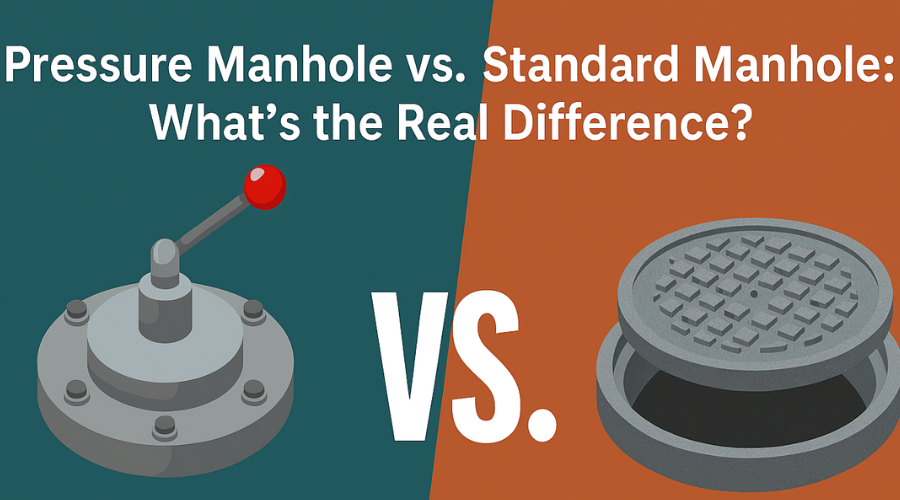
When discussing industrial storage tanks, wastewater systems, chemical processing equipment, or large fluid containers, the terms pressure manhole and standard manhole come up often. At a glance, both seem similar. They give operators a way to access the interior of tanks or vessels for inspection, cleaning, maintenance, or repairs. But beneath that surface similarity lies a set of very real and important differences that impact safety, performance, compliance, lifespan, and cost.
If you are comparing the two for your facility or trying to understand which option is a better long-term investment, it helps to break down what each type is designed to handle. Only then can you see why many industries choose one over the other.
This guide explains the key differences, the engineering logic behind each design, and how to choose the right option for your operational needs.
Understanding the Purpose of a Standard Manhole
A standard manhole is built for basic access. It is commonly used on storage tanks, agricultural containers, non pressurized vessels, and systems where internal pressure remains close to the surrounding atmospheric pressure. These manholes are intended to provide a secure but uncomplicated entry point for workers.
Key characteristics of standard manholes include:
Simple Construction
They usually feature a lid or cover that seals with bolts or clamps. The sealing capability focuses mainly on preventing external contaminants from entering and stopping stored contents from leaking out.
Limited Pressure Handling
Standard manholes are not engineered to withstand internal pressure loads. If pressure increases inside the tank, the cover or gasket may fail.
Lower Manufacturing Cost
Since they do not require heavy duty reinforcement, specialized seals, or high pressure rated metalwork, standard manholes are more economical.
Common Usage Areas
They are typically used in agriculture, food processing, water storage, and general industrial applications where pressure build-up is not a factor.
For regular tanks in mild operating environments, a standard manhole is functional, safe, and cost effective. Problems only appear when the operating conditions involve pressure, vacuum conditions, or hazardous materials.
What Sets a Pressure Manhole Apart
A pressure manhole is designed for a completely different mechanical environment. These manholes are used on pressure vessels, boilers, chemical reactors, process tanks, and sealed industrial systems where internal pressure can fluctuate or reach significant levels.
These units must pass strict engineering and safety standards because pressurized environments are inherently more dangerous.
Key characteristics of pressure manholes include:
High Pressure Resistance
They are manufactured with thick, reinforced steel or alloy materials capable of withstanding internal pressure without deforming or failing.
Advanced Sealing Mechanisms
Specialized gaskets, heavy duty clamps, and precision engineered rings ensure a tight seal. Even when internal pressure increases, the seal maintains integrity to prevent leaks or dangerous releases.
Compliance with Safety Codes
Pressure manholes must often meet ASME, PED, or other global pressure vessel standards. Their design undergoes more rigorous testing and certification.
Suitable for Hazardous and High Energy Systems
Industries handling steam, compressed gas, chemicals, or volatile liquids rely on pressure manholes because even a small leak could create a serious safety hazard.
Durable and Long Lasting
Built to withstand pressure cycles, stress, temperature changes, and chemical exposure, these manholes have a longer service life under harsh conditions.
Because of these requirements, facilities often work with a specialized pressure manhole supplier who understands engineering standards rather than a generic industrial hardware provider.
The Real Difference: Pressure Capability
At the core, the difference between a pressure manhole and a standard manhole is the ability to handle internal forces. A standard manhole is simply not built to resist pressure. When pressure increases, the cover may blow out, the gasket may fail, or the entire access point may deform.
A pressure manhole, on the other hand, is engineered specifically to resist those forces while maintaining a reliable, leak free seal. To break it down even further:
Feature | Standard Manhole | Pressure Manhole |
Internal pressure handling | Very low | High and stable |
Typical materials | Mild steel, basic alloys | High grade reinforced steel or certified alloys |
Sealing type | Basic gasket | High compression gasket, precision fit |
Code compliance | Low | Mandatory in regulated industries |
Safety risk under pressure | High | Low when used correctly |
Trying to use a standard manhole in a pressurized system is not just an engineering mistake, it becomes a safety hazard.
Why Pressure Manholes Cost More
A common question for buyers is why pressure manholes command a higher price. The answer lies in the engineering requirements and quality assurance involved.
They need thicker materials
They require special forging or casting processes
Welding demands certified procedures
They must pass hydrostatic or pneumatic pressure tests
They often require third party inspection or approval
Gaskets are made from high grade materials like PTFE, viton, or EPDM with specialized compression ratings
You are not just paying for metal. You are paying for reliability and safety under conditions where failure can be catastrophic.
Where Each Type Should Be Used
To avoid costly mistakes, ensure that you match the manhole type with the environment it will operate in.
Use a standard manhole if:
The tank is not pressurized
The material stored is non hazardous
Temperature fluctuations are minimal
You only need simple access for maintenance
Use a pressure manhole if:
The tank operates under internal pressure
You are dealing with steam or compressed air
The system involves chemicals, gases, or volatile liquids
Safety regulations require pressure vessel compliance
The tank undergoes pressure cycles or vacuum conditions
Choosing incorrectly can lead to structural failure, regulatory violations, and in the worst cases, severe accidents.
How to Make the Right Choice for Your Facility
Before purchasing, ask the following:
What pressure levels will the tank experience?
Even mild pressure increases mean a standard manhole may not be appropriate.
Does the system fall under pressure vessel regulations?
If yes, a pressure rated manhole is mandatory.
What materials are being stored inside?
Hazardous materials often require pressure rated access points even in non pressurized systems.
Will the tank experience temperature changes?
Heat expansion can raise pressure unexpectedly.
Do you require long term reliability in demanding environments
Pressure manholes offer greater durability.
Talking directly with a pressure manhole supplier can also clarify which specifications align with your operational conditions.
Final Thoughts
While pressure manholes and standard manholes may appear similar from the outside, the difference lies in their purpose. A standard manhole is perfectly adequate where internal pressure is not a concern. But when a tank or vessel is subject to internal pressure, temperature fluctuations, or safety regulations, a pressure manhole becomes essential.
Using the wrong type does not just affect performance, it can lead to safety hazards, leaks, downtime, and long term damage to equipment.
If your operation works with steam, chemicals, compressed air, or regulated tank systems, take the time to evaluate your needs carefully. Consult engineers, review system requirements, and work with a trusted pressure manhole supplier to ensure your equipment meets the right standards.
A well chosen manhole is more than an access point. It plays a vital role in safety, compliance, and operational reliability.


Comments