Manual vs. Automatic Sampling Valves: Which One Fits Your Operation Best?
- Nov 4, 2025
- 5 min read
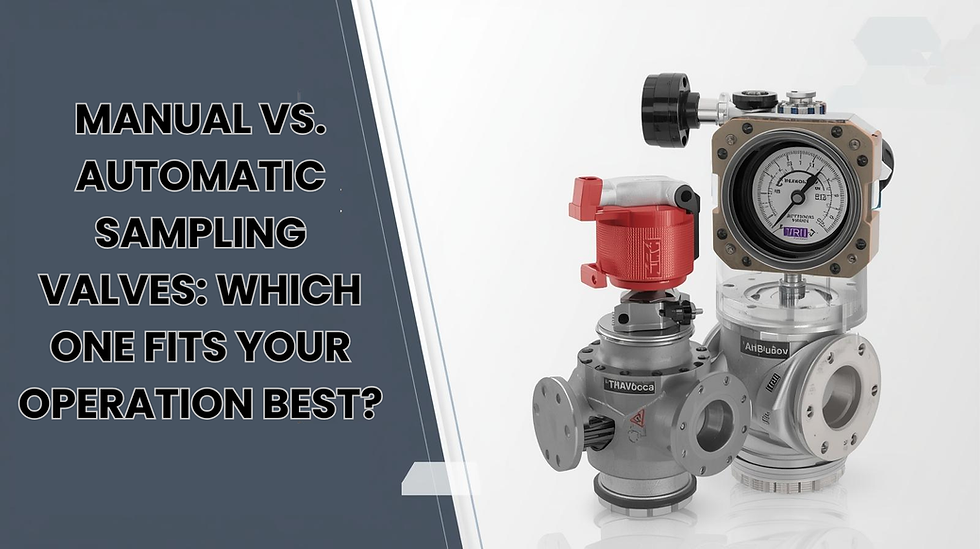
Sampling valves play a critical role in quality control across industries like chemical processing, pharmaceuticals, food and beverage, and oil refining. These valves allow operators to collect representative samples of liquids, gases, or slurries directly from production lines or tanks without disrupting the process. However, not all sampling valves are the same. The two primary types—manual and automatic—offer distinct advantages depending on operational needs, budget, and safety requirements.
Choosing between manual and automatic sampling valves can influence not only the precision of your samples but also the overall efficiency of your operation. Let’s explore how each type works, their pros and cons, and how to decide which option fits your system best.
Understanding Manual Sampling Valves
Manual sampling valves are operated by hand, usually through a lever, knob, or handle. The operator physically opens the valve, collects the sample, and then closes it. This straightforward design has made manual valves a popular choice for decades.
Advantages of Manual Sampling Valves
Cost-Effective:
Manual valves are typically more affordable upfront compared to automated systems. Their simple design means fewer parts, which keeps manufacturing and maintenance costs low.
Easy to Operate:
They are intuitive to use and require minimal training. For small-scale facilities or plants with occasional sampling needs, manual valves are practical and reliable.
Durability and Low Maintenance:
Because they have fewer moving components and no electrical or pneumatic connections, manual valves tend to have a longer lifespan and lower failure rates.
Flexibility:
Operators can adjust flow and sampling speed in real-time, making manual valves suitable for processes where visual inspection or sensory evaluation of samples is necessary.
Limitations of Manual Sampling Valves
Despite their benefits, manual valves are not ideal for every situation.
Human Error: The quality of a manual sample depends on the operator’s technique. Inconsistent timing or incomplete flushing can affect sample accuracy.
Safety Concerns: In applications involving hazardous or high-pressure fluids, manual sampling exposes workers to potential risks.
Incompatibility with Remote Monitoring: Manual valves don’t integrate with automated control systems, limiting their use in advanced process environments.
Understanding Automatic Sampling Valves
Automatic sampling valves are designed to collect samples at set intervals or under specific conditions without manual intervention. They are often part of a larger automated control system and can be operated electronically or pneumatically.
Advantages of Automatic Sampling Valves
Precision and Consistency:
Automatic valves ensure samples are taken at consistent intervals, eliminating human variability. This consistency is critical for industries where precision data drives production quality.
Enhanced Safety:
Since sampling occurs automatically, workers don’t need to be near hazardous areas or high-pressure lines. This significantly reduces exposure risks and improves workplace safety.
Integration with Digital Systems:
Automatic valves can connect to supervisory control and data acquisition (SCADA) systems or programmable logic controllers (PLCs), enabling remote operation and data logging.
Time and Labor Savings:
Once set up, automatic systems require minimal human input. This is ideal for high-volume or 24/7 operations where continuous monitoring is required.
Limitations of Automatic Sampling Valves
Higher Initial Cost:
Automatic valves are more complex and come with higher installation and setup costs.
Maintenance Complexity:
They require periodic calibration, inspection, and sometimes specialized technicians to handle repairs.
Dependence on Power or Air Supply:
Any interruption in electrical or pneumatic power can disrupt automatic sampling operations.
Key Factors to Consider When Choosing a Sampling Valve
Selecting between manual and automatic sampling valves isn’t just about technology—it’s about aligning the valve type with your operational needs. Here are some critical factors to evaluate before deciding.
1. Frequency of Sampling
If your operation requires frequent or continuous sampling, automatic valves make more sense. They ensure consistency without tying up personnel. For periodic or occasional sampling, manual valves may be sufficient.
2. Type of Fluid
Consider whether your process involves corrosive, viscous, or hazardous materials. Automatic valves are preferable for dangerous or toxic substances since they reduce human contact. Manual valves, however, are well-suited for benign or easy-to-handle liquids.
3. Process Environment
In high-temperature or high-pressure systems, safety and reliability are paramount. Automatic valves provide more protection in these conditions. On the other hand, for small-scale or open environments, manual valves offer simplicity and ease of access.
4. Data and Compliance Needs
Modern industries rely on precise data for quality assurance and regulatory compliance. Automatic valves can log and transmit sample data directly to digital systems, helping maintain detailed records. Manual valves rely on human documentation, which increases the potential for error.
5. Budget and Long-Term ROI
Manual valves have a lower initial investment, making them attractive for small plants or pilot projects. However, automatic valves often pay for themselves in the long run through improved efficiency, reduced labor costs, and fewer sampling errors.
Applications Across Industries
Both manual and automatic sampling valves have important roles across various industries.
Chemical and Petrochemical Industry
In chemical plants, safety and consistency are top priorities. Automatic sampling valves are often preferred here, as they can be programmed to collect samples without exposing personnel to toxic or flammable chemicals.
Pharmaceutical Industry
Pharmaceutical manufacturing requires precise, contamination-free sampling. Automatic valves ensure repeatable accuracy, while manual valves may be used in laboratory or small-batch testing environments.
Food and Beverage Industry
Manual valves are commonly found in beverage and dairy processing plants, especially where sensory evaluation is needed. However, automatic valves are becoming popular for automated quality control in large-scale production.
Oil and Gas Industry
Automatic sampling valves dominate in oil and gas operations due to their reliability in harsh environments. They enable consistent sampling for crude oil, gasoline, and other products without interrupting production.
Water Treatment Plants
Manual valves are often used in smaller treatment facilities, while larger operations with continuous monitoring needs lean toward automated systems for better process control.
Safety Considerations
Safety is one of the most important aspects of valve selection. In operations involving high pressure, temperature, or hazardous chemicals, automatic valves significantly reduce the risk of accidents. By minimizing direct human interaction, these systems protect workers while maintaining process integrity.
For manual valves, safety depends heavily on the operator’s training and the quality of valve design. Proper seals, pressure relief features, and safe sampling procedures can help reduce risks. Regular maintenance and inspection are also essential to prevent leaks or mechanical failures.
The Role of a Reliable Sampling Valve Exporter
Whether you choose a manual or automatic sampling valve, partnering with a trusted supplier is crucial. A dependable sampling valve exporter provides not only high-quality valves but also technical guidance to help you select the best model for your process.
Exporters with experience in multiple industries can recommend materials, designs, and configurations that align with your operational requirements and safety standards.
Reputable exporters also ensure compliance with international standards, offer after-sales support, and provide customization options to match specific process conditions. Their expertise can help optimize performance, extend valve life, and minimize downtime.
Making the Right Decision
In the end, the choice between manual and automatic sampling valves depends on your process scale, safety requirements, and automation goals.
If you run a small operation or need flexibility in sampling, manual valves offer simplicity and affordability. If your process requires precision, safety, and integration with automated systems, automatic valves are the better investment.
The key is to balance performance with practicality. Evaluate your system’s needs, consult your supplier, and invest in a solution that ensures accurate, reliable samples every time. With the right valve in place, you can maintain high product quality, ensure compliance, and improve overall operational efficiency.
Conclusion
Sampling valves are small components with a big impact on process control and product quality. Understanding the differences between manual and automatic valves helps you make an informed decision that supports your production goals. By working with a professional sampling valve exporter, you can find a valve solution tailored to your unique needs—whether that means hands-on control or seamless automation.


Comments